
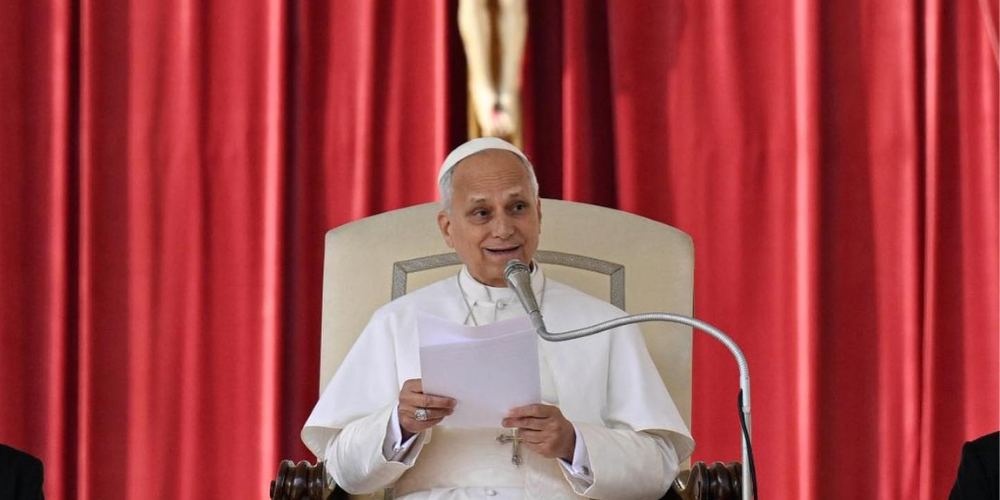
Pope Leo XIV Calls Out the Wealthy Elite for Living in a “Bubble of Luxury”
Pope Leo XIV has issued a bold critique of the global wealthy elite, accusing them of isolating themselves in a “bubble of comfort and luxury” as poverty deepens across the world.
His remarks, detailed in his first major teaching document “I Have Loved You,” reflect a powerful continuation of Pope Francis’ moral stance on inequality and the Church’s duty toward the poor.
A Continuation of Pope Francis’ Legacy
Released by the Vatican on Thursday, the 100-page document was initially started by Pope Francis before his death. Pope Leo, elected in May, honored his predecessor’s vision by completing and signing the text himself. He credited Pope Francis throughout, blending his own reflections with Francis’ enduring message of compassion and justice.

Instagram | pontifex | Pope Leo released the 100-page Vatican document, completing the vision initially started by the late Pope Francis.
The document traces Christianity’s unbroken commitment to the marginalized, from the earliest Biblical teachings to modern Church movements. It highlights efforts of women’s religious orders caring for the sick and hungry and applauds grassroots campaigns advocating for land, housing, and fair work.
“When the Church kneels beside a leper, a malnourished child, or an anonymous dying person, she fulfills her deepest vocation,” Pope Leo wrote, echoing the spirit of selfless love that has defined the Church’s history.
Defending the Poor and Condemning Excess
Pope Leo speaks firmly against social indifference and economic inequality. He warns that the gap between the rich and the poor continues to widen. According to him, the Church’s “preferential option for the poor” is not a choice but a core part of Christian faith.
Drawing from Pope Francis’ well-known critiques, Leo revisits the idea of a global “economy that kills.” He condemns the false sense of happiness built on wealth and comfort.
“In a world where the poor are increasingly numerous, we paradoxically see the growth of a wealthy elite, living in a bubble of comfort and luxury, almost in another world compared to ordinary people,” he writes.
Pope Leo’s message urges people to confront the roots of poverty instead of only easing its effects. He reminds the faithful that compassion must lead to real action, not just good intentions.
Addressing Criticism and Reaffirming Commitment
While Pope Francis faced backlash—especially from conservative circles in the United States—Pope Leo appears ready to confront similar opposition with conviction. In a recent interview with Crux, he stated, “The fact that I am American means people can’t say, like they did about Pope Francis, ‘he doesn’t understand the United States.’”
His stance signals that his alignment with Francis’ social teachings is intentional and unwavering. By reaffirming the Church’s solidarity with the poor, Leo positions himself as both a spiritual leader and a moral voice for social justice.
Signed on the Feast of St. Francis of Assisi
Pope Leo signed the document on October 4, the feast day of St. Francis of Assisi—a symbolic choice that underscores humility and service. The 13th-century saint, known for renouncing wealth to live among the poor, inspired both Pope Francis and now Pope Leo in shaping their visions of a humble Church.
Before becoming pope, Leo—then Robert Prevost—spent years as a missionary in Peru with the Augustinian order. His experiences among impoverished communities gave him a firsthand understanding of the struggles he now speaks about from the Vatican.
A Renewed View on Liberation Theology

Instagram | pontifex | Pope Leo XIV’s first document stresses that compassion is the Church’s purpose.
One of the most compelling aspects of “I Have Loved You” is its approach to liberation theology. Once a controversial topic in the Vatican, liberation theology emphasizes a “preferential option for the poor,” a theme Pope Leo now reaffirms.
He references the Church’s earlier tensions with this movement, particularly during the papacy of St. John Paul II, but frames those disputes as growing pains rather than rejection. Leo praises figures like St. Oscar Romero—the Salvadoran archbishop assassinated in 1980 for defending the oppressed—as enduring symbols of courage and faith.
By citing Latin American Church documents, Pope Leo signals a return to empathy-driven theology—one rooted in justice rather than ideology.
The Heart of the Church Lies with the Poor
Pope Leo XIV’s first teaching document delivers a clear message: compassion is essential. The Church’s purpose, he reminds us, is to uplift those who suffer. He urges believers to move past comfort, face inequality head-on, and stand beside the vulnerable.
“The fact that some dismiss charitable works as an obsession of a few,” Leo writes, “shows how far we’ve drifted from the Gospel’s true meaning.”
His message reaches beyond faith. It challenges the world’s conscience. As wealth gaps grow and people grow distant from one another, Pope Leo’s words remind us that faith must lead to action. Without compassion, belief loses its strength.
“I Have Loved You” marks a new beginning for his papacy. It reinforces the Church’s mission to serve, not just speak. Pope Leo calls for an end to complacency and a rejection of false comfort. He reminds followers that faith is not measured by luxury but by how one responds to human suffering.
More in Uncategorized
-
 Here’s What Artists Should Know About Copyright & Its Implications
Copyright protects your art from the moment you create it. The second your drawing, painting, sculpture, or photo is fixed in...
September 27, 2025 -
 Everything to Know About Vogue America’s New Editor, Chloe Malle
Chloe Malle just stepped into one of the most powerful roles in fashion media: Head of Editorial Content at Vogue America....
September 21, 2025 -
 Did Barron Trump Apply to Harvard? Clearing Up the Rumors
Speculation often swirls around public figures, and in recent months Barron Trump’s college choices became part of the conversation. Questions surfaced...
September 20, 2025 -
 Can You Be Naked in Texas?
The Texas public nudity law isn’t as simple as “no clothes, you are in trouble.” It all comes down to intent,...
September 13, 2025 -
 Why AI Is Now a Necessity, Not a Choice, for Law Firms
Artificial intelligence is no longer a futuristic concept for the legal industry. It is steadily changing how law firms operate, not...
September 13, 2025 -
 Waikiki Lifeguard Cleared in Confrontation With Notorious Criminal
On a hot day at Kuhio Beach, veteran lifeguard Christopher Kekaulike Kam stepped in when things got out of control. A...
August 13, 2025 -
 Gawking at the Coldplay ‘Kiss Cam’ Affair Is Voyeurism at Its Worst!
Coldplay concerts are meant to be joyful. But during a recent show, a playful kiss cam bit turned into a public...
August 6, 2025 -
 Essential Safety and Success Resources for Trans Journalists
Trans journalists go through tough spaces every day. In a field that often tests your limits, knowing where to turn for...
July 30, 2025 -
 USF Law School Becomes First to Fully Embed AI in Legal Education
AI is no longer a distant tool for tech companies. At the University of San Francisco School of Law, it is...
July 23, 2025
More From Lawyers Favorite
-
 Sparkling“Keep Moving:” Morgan Freeman, 88, Reveals the Secret to Longevity
Morgan Freeman has captivated audiences for decades, and his secret to longevity is surprisingly simple. The Hollywood icon, 88, follows a...
December 14, 2025 -
 UncategorizedWhy Black Friday Deals Don’t Feel as Special Anymore
Black Friday once symbolized a rush of excitement — predawn lines, doorbuster chaos and a sense that the year’s best prices...
December 13, 2025 -
 SurprisingShakira and Sons Steal the Show at “Zootopia 2” Premiere
Shakira rarely slows down, but “Zootopia 2” handed the Colombian superstar something even better than another chart moment: time with her...
December 7, 2025 -
 FunniesRavens Dominate Dolphins (28-6) in Key Victory
The Baltimore Ravens achieved more than just a win on October 30, 2025. They made a strong statement on a national...
November 30, 2025 -
 Legal AdviceHow Freelancers Can Secure a Personal Loan Without a Salary Slip
Freelancers often hit a few extra hurdles when they try to qualify for a personal loan. Without a monthly salary slip...
November 30, 2025