

Is a ChatGPT-Written Will Legal?
At first glance, using AI to draft a will seems like a smart idea. It’s fast, free, and has a modern appeal. You enter a few details, hit submit, and a professional-looking legal document appears. It’s easy to assume that if it looks like a will, it must function like one.
That assumption can lead to serious problems. Legal experts warn that AI-generated wills, while polished in appearance, may not hold up in court. Confident-sounding language does not make a document legally valid. Courts care about accuracy, procedure, and proof.
A will is more than just words on a page—it’s a formal legal instrument with strict rules. Overlooking even one requirement can render it void, leaving state law to dictate outcomes instead of your wishes. Harry Margolis, senior law attorney and author of “Get Your Ducks in a Row,” cautions Americans against relying on AI tools to produce a legally binding will.
That risk grows when AI handles something it cannot truly understand. AI does not know your family history. It does not grasp your local law unless forced through careful prompts. Even then, it cannot guarantee accuracy. That gap is where problems begin.
AI Falls Short With Legal Wills
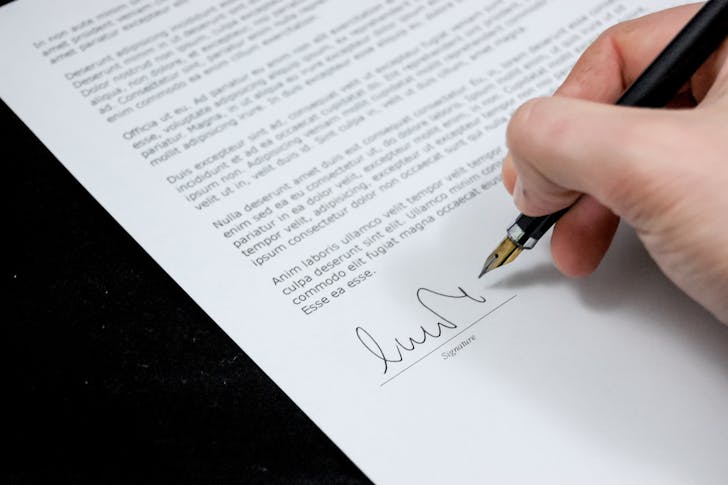
Pixabay / Pexels / A valid will must follow execution rules set by law. In the UK, Section 9 of the Wills Act 1837 spells this out clearly. The will must be signed by the testator.
Two witnesses must be present at the same time. They must also sign the document correctly.
AI cannot oversee that process. It cannot confirm who watched whom sign. It cannot stop a mistake in the room. Courts do not forgive these errors. If the execution fails, the will fails, no matter how good the wording sounds.
Jurisdiction adds another layer of danger. AI systems often default to American legal concepts. They do this quietly and without warning. A will based on the wrong country or state law may be invalid from the start.
In testing, AI-generated UK wills failed basic UK execution rules. The errors only changed after repeated and very specific prompts. Most users would never catch these flaws before signing.
Then come omissions. AI does not ask follow-up questions the way a solicitor does. It does not pause and say something feels missing. As a result, it may skip assets, ignore stepchildren, or fail to plan for disabled dependents.
These gaps are not minor. They are the main reason wills get challenged. Families end up in court because something important was left unclear or left out entirely. AI cannot protect you from that outcome.
The Hallucination Risk Experts Warn About

RDNE / Pexels / Lawyers are allowed to use AI, but only with strict limits. Professional rules make one thing clear. Responsibility never shifts to the software. The lawyer remains fully accountable.
One of the biggest dangers with generative AI is hallucination. That term means the system produces information that sounds right but is completely false. It does not know it is wrong. It simply fills gaps with plausible text.
This problem has already caused serious legal fallout. Lawyers have submitted briefs filled with fake cases created by AI. Courts responded with heavy sanctions and public reprimands. Judges do not treat AI mistakes lightly.
In California, one attorney was fined $10,000 after filing a brief where most citations were fabricated. In another federal case, a law firm faced penalties exceeding $30,000. These incidents are now part of the legal record.
A will may not cite case law, but the risk remains. If AI invents legal language, misstates trustees’ powers, or misunderstands inheritance rules, the damage surfaces later. By then, the person who wrote the will is gone.
That reality makes correction impossible. Courts cannot ask the deceased what they meant. They can only interpret what appears on the page. AI errors then become permanent problems.
The American Bar Association addressed this directly in Formal Opinion 512. It requires lawyers to independently verify any AI-generated content. Blind reliance violates ethical duties of competence and honesty.
More in Legal Advice
-
 How to Secure a Government Job During Budget Cuts
Federal hiring slows down when budgets tighten, yet it never stops completely. Agencies still need analysts, advisors, and policy staff to...
March 1, 2026 -
 Brooklyn Beckham’s Billionaire Father-in-Law Breaks Silence on the Family Feud
The Beckham family drama just took another sharp turn. This time, the voice cutting through the noise belongs to billionaire investor...
February 22, 2026 -
 Notre Dame Faces Faculty Resigns After Controversial Appointment
Tension is rising at the University of Notre Dame after two scholars cut formal ties with the Liu Institute for Asia...
February 22, 2026 -
 High Court Upholds Malay Celeb Preacher Da’i Syed’s Rape Conviction
The Shah Alam High Court has spoken, and it spoke clearly. Celebrity preacher Da’i Syed will go to prison now, not...
February 15, 2026 -
 Venezuela Opens Oil Industry as U.S. Threatens Cuba Tariffs
Venezuela has passed a significant law change aimed at opening its oil industry to foreign investment. The move, endorsed by acting...
February 15, 2026 -
 Prince Harry Supports Elizabeth Hurley in Tabloid Privacy Case
London’s High Court became the center of attention as Prince Harry appeared in support of Elizabeth Hurley during an emotional hearing...
February 6, 2026 -
 5 Ways AI Is Transforming Daily Legal Workflows
AI did not storm into law firms with fireworks. It slipped in through contracts, research tabs, inboxes, and meeting notes. By...
February 1, 2026 -
 How to Legally Protect Your Side Hustle Without Spending a Fortune
Starting a side hustle is a practical way to test a business idea, generate extra income, or lay the foundation for...
February 1, 2026 -
 Mayor Zohran Mamdani Appoints Christine Clarke as Human Rights Chair
On January 7, 2026, during his first full week in office, Zohran Mamdani made a move that set the tone for...
January 25, 2026
More From Lawyers Favorite
-
 Criminal AttorneyUS Supreme Court Limits Sentence Reductions for Federal Prisoners
The U.S. Supreme Court has issued a major ruling that reshapes how far prison reform laws can reach into past sentencing....
June 12, 2026 -
 Celeb JusticeInside Ex-Prince Andrew’s “Bleak” Life in Exile as New Claims Emerge
Once positioned near the center of Britain’s royal institution, Andrew Mountbatten-Windsor now faces a reality far removed from palace ceremonies and...
June 6, 2026 -
 Legal AdviceU.S. Lawmakers Push Bill to Expand Burn Pit Benefits to Civilian Workers
A bipartisan group of U.S. lawmakers has introduced a draft proposal aimed at expanding workers’ compensation access for civilian federal employees...
May 30, 2026 -
 Law DegreePentagon AI Use in War Raises Questions on Legal Limits and Accountability
AI has moved from support tools in defense operations to a central part of how modern warfare is conducted. In the...
May 22, 2026 -
 Criminal AttorneyIdaho Bathroom Law Faces Federal Lawsuit by Transgender Residents
A new Idaho law restricting restroom access has triggered a federal court challenge from transgender residents who say it places daily...
May 15, 2026