
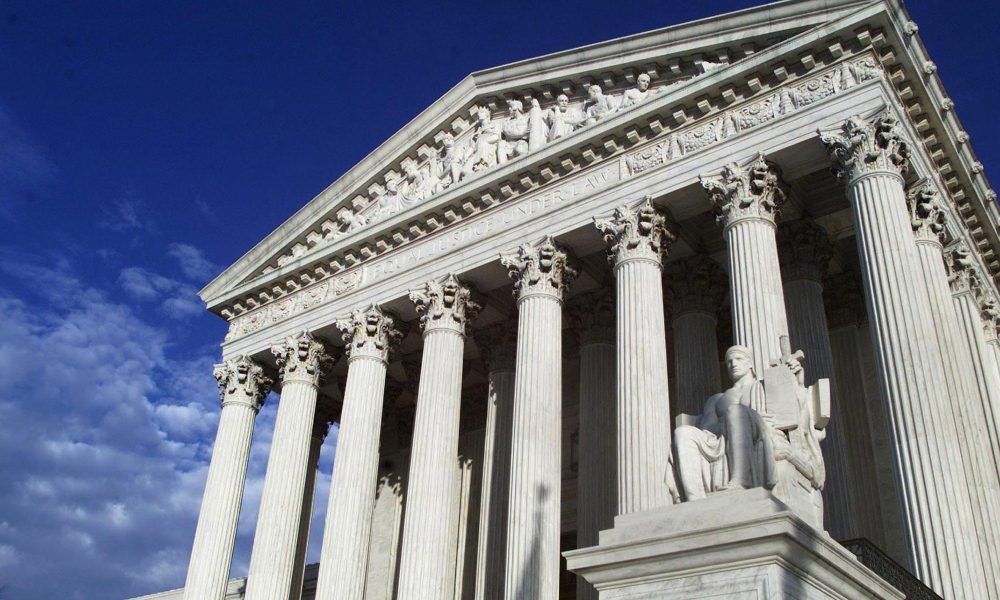
5 of the Weirdest Supreme Court Decisions in America
Later on in your study of law, you will realize that not all problems in life can be solved before a court. When people rely on the laws of the land to solve some of their problems, such as telling the difference between a fruit of the vegetable, they can come up with some of the most ridiculous rulings ever. Here are some cringe-worthy rulings that you should know of:
Tomatoes Are Vegetables

Tomatoes are a vegetable?
While they go better on a salad rather than on a smoothie, the tomato has been botanically classified as a fruit. A fruit is a plant’s ripened ovary, so the tomato is a fruit in the same way that an apple, banana or mango is. Unfortunately, the Supreme Court disagreed with this when it ruled a tax case in Nix v. Hedden.
In the 1800s, the Port of New York was taxing tomatoes as vegetables. The Nix family, who were importing tomatoes, knew that they were not fruits so they sued to recover all the taxes that they had paid. Unfortunately, the Court sided with Edward Hedden, the Collector of the Port of New York. While insisting that tomatoes are indeed vegetables, the Supreme Court held that the law has to be applied by its spirit rather than by the letter.
Ninety-Five Barrels of Apple Cider Vinegar Got Sued, and Actually Lost

Apparently, apple cider is a valid defendant.
You might have learned about locus standi or legal personality in your first few years in law school, but this was not always the case. Back then, anything on earth can be sued and in US v. Ninety-Five Barrels Alleged Apple Cider Vinegar, something you regularly find in the grocery got sued.
Here, Douglas Packing Company’s secret to producing their apple cider vinegar was dehydrating fresh apples, before rehydrating them again with pure water, thus producing the vinegar. So, you might ask what seems to be the problem with that? The Supreme Court head that apple cider vinegar can mislead consumers since the label on the product said that the vinegar was made from “selected” apples.
You Can Block Junk Mail from Reaching You
Before the 1970s, businesses used to send promotional material, including pornographic materials, to individual households. As expected, a lot of citizens did not find this funny, so they challenged the practice until it reached the highest court of the land.
The Court ruled that people have the right to choose the kind of materials that they want to enter their homes. The court even went further when it ruled that it follows that people have the legal right to reject any material at all, regardless of the reason. A man’s house is his castle, so an advertiser’s right of free speech ends where your own borders begin. While the advertiser can say whatever they want, this is not the case in somebody else’s property.
Satirists Are Not Slanderers

Jerry Falwell opening a Republican Party fundraiser with a joke
In Hustler Magazine v. Falwell, Hustler published a parody ad featuring Jerry Falwell talking about losing his virginity. In such parody, he lost it to his mother and was the last man in town to sleep with her. While the right of free speech is constitutionally protected, it virtually ends when you start to offend someone. In this case, Falwell got offended so he sued Hustler magazine for defamation. While he won before the lower court, the Supreme Court did not favor his position.
Ultimately, it was ruled that Satirists do not really defame people. This case was such a big win for comedians across the country, that this inspired a movie which stars Edward Norton entitled “The People vs. Larry Flynt” where a lot of the court transcripts were reproduced in verbatim.
You Do Not Own the Sky
Skyscrapers were starting to grow like mushrooms in the early 1900s. However, residents of a district in Boston were not happy about their town turning into a concrete jungle, so they passed an ordinance which prohibited the construction of buildings that were above 100 feet tall.
This was the subject in Welch v. Swasey where the petitioner owned property in the residential section and wanted to build a 125-foot tower. Of course, the city told him to go to hell but he insisted as he claims to own the entire airspace on top of his property. Sadly, the Court ruled in favor of Boston. While they agreed that the statute was discriminatory and pretty useless, they had no business in a jurisdiction where no harm was apparently done.
While the law is made for public order, it is not meant to take the place of human problems which other areas of discipline could, such as botany or engineering. Do you know of any other ridiculous Supreme Court rulings? Share them with us in the comments below
More in Legal Advice
-
 Jersey Introduces New Rules for Dangerous Dog Registration
Dog owners in Jersey must renew their dog licences for 2026. For the first time, applicants must declare if their dog...
January 25, 2026 -
 Useful Hygiene Tips for Bulk Bin Shopping Everyone Should Know
Bulk bins look friendly and eco-smart. They save money, cut packaging, and let you buy exactly what you need. They also...
January 18, 2026 -
 DOJ Reviews Over 5 Million Documents Related to Jeffrey Epstein
The Department of Justice (DOJ) is reviewing more than 5.2 million documents related to convicted sex offender Jeffrey Epstein. The review...
January 17, 2026 -
 Taylor Swift’s Viral Glitter Freckles Steal the Show in New ‘Life of a Showgirl’ Footage
Taylor Swift knows how to turn a small detail into a big moment. This time, it is a dusting of glitter...
January 11, 2026 -
 Did Barron Trump Apply to Harvard? Clearing Up the Rumors
Speculation often swirls around public figures, and in recent months Barron Trump’s college choices became part of the conversation. Questions surfaced...
January 10, 2026 -
 Nicotine Pouches Less Harmful Alternatives for Smokers, But Not Safe for All, Study
Nicotine pouches are having a moment. They are small, smokeless, and easy to hide. Many smokers see them as a cleaner...
January 4, 2026 -
 The “Eight-Second Rule” of Legal Brothels Most People Don’t Know About
When people talk about legal brothels, safety is rarely the first thing they picture. Most imagine chaos, risk, or a total...
December 28, 2025 -
 USF Law School Becomes First to Fully Embed AI in Legal Education
AI is no longer a distant tool for tech companies. At the University of San Francisco School of Law, it is...
December 24, 2025 -
 Comedian Russell Brand Faces Criminal Charges After Years of Allegations
Russell Brand has officially been charged with rape, indecent assault, and sexual assault, stemming from alleged incidents that took place between...
December 24, 2025
More From Lawyers Favorite
-
 Legal AdviceNew Housing Law May Help Renters Become Homeowners More Easily
For years, renting felt like a financial dead end for many people. You pay on time every month, yet your credit...
April 4, 2026 -
 Law DegreeColorado Law Bars Adult Prosecution for 11-YO Accused of Killing His Minor Brother
A quiet neighborhood in Centennial, Colorado, became the center of a heartbreaking investigation after a five-year-old boy was found dead inside...
March 29, 2026 -
 Legal AdviceHow to Handle Unpleasant Family Habits at Home Without Conflict
Family life isn’t always easy, particularly when someone’s habits start clashing with the way a household runs. From awkward bathroom routines...
March 29, 2026 -
 Criminal AttorneyBritney Spears Rep Calls DUI Arrest an “Inexcusable Incident”
Britney Spears has spent decades in the public eye, but the latest headline about the pop icon carries a serious tone....
March 22, 2026 -
 Law DegreeAtlanta Woman Arrested in $79K Fraud After Impersonating Sheriff Captain
Authorities in Florida recently exposed a disturbing fraud operation that relied on fear, impersonation, and digital money transfers. Investigators say a...
March 22, 2026