
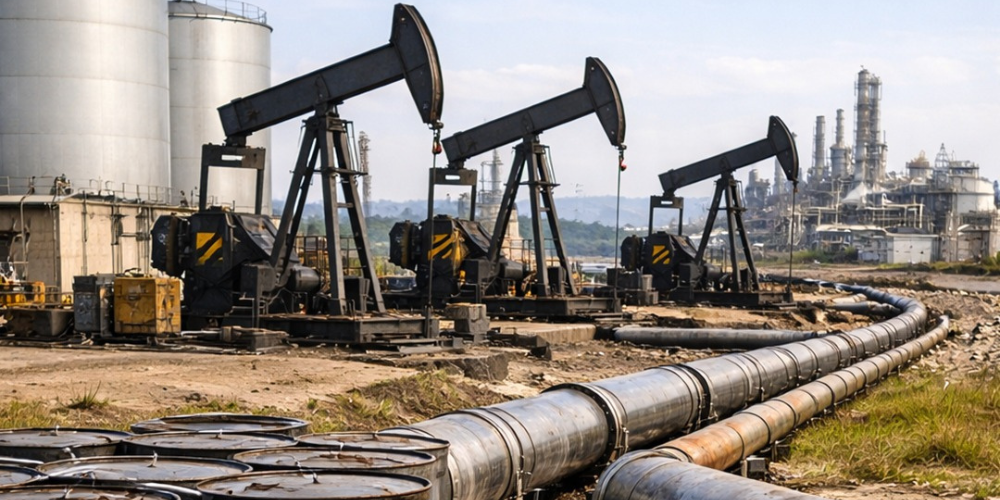
Venezuela Opens Oil Industry as U.S. Threatens Cuba Tariffs
Venezuela has passed a significant law change aimed at opening its oil industry to foreign investment. The move, endorsed by acting President Delcy Rodríguez, allows international companies to operate Venezuelan oilfields at their own risk and expense, stepping into a sector previously dominated by state-owned Petróleos de Venezuela (PDVSA).
This decision aligns with U.S. President Donald Trump’s pressure on Caracas, as he has repeatedly encouraged American firms to invest in Venezuela’s vast energy reserves. The country holds the world’s largest proven oil reserves, and the new law aims to maximize the economic potential of these resources.
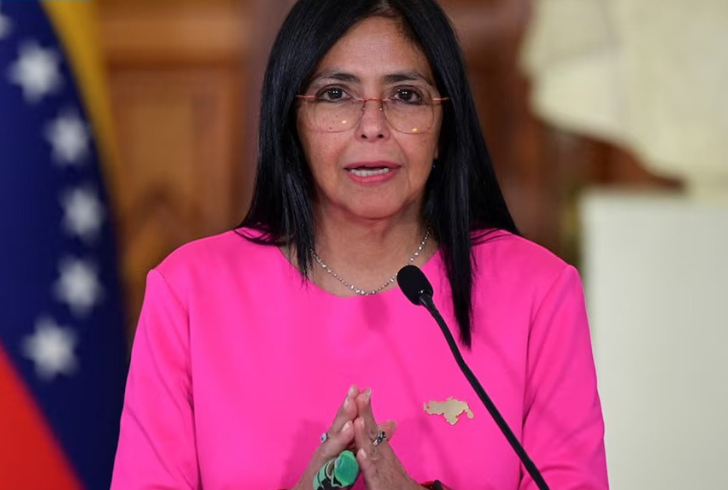
Instagram | thecitizentz | Delcy Rodríguez backs a new legal framework for private-sector management of Venezuelan oil assets.
Acting President Rodríguez highlighted the significance of the reform at a public event. She stated, “This law allows us to make a true historic qualitative leap to turn those oil reserves, the largest on the planet, into the greatest happiness a people can have, with the Venezuelan people as the rightful owners of that happiness.”
Her brother, National Assembly leader Jorge Rodríguez, said the law could speed up production in undeveloped oil fields. He described it as a boost for the energy sector. The reform passed the legislature unanimously. It now needs Rodríguez’s signature and official publication to take effect.
U.S. Pressure on Cuba
On the same day, President Trump signed an executive order threatening additional tariffs on nations supplying oil to Cuba. He labeled Cuba’s government policies as a national security threat, citing its ties with Russia, support for groups like Hezbollah and Hamas, and internal political repression.
Cuba has relied heavily on Venezuelan oil, obtaining over a third of its supply from Caracas. The capture of Nicolás Maduro disrupted these shipments, contributing to longer gas lines and increasing power shortages in Cuba.
Speaking at the “Melania” premiere, Trump said the goal is not to destroy Cuba’s economy but expressed skepticism about the island’s long-term survival, noting its history of political and economic mismanagement.
Cuba’s Foreign Minister, Bruno Rodríguez, condemned the tariff threat, calling it “a brutal act of aggression against Cuba and its people” and accusing the U.S. of using coercion to enforce its blockade policy.
Investment and Security Concerns
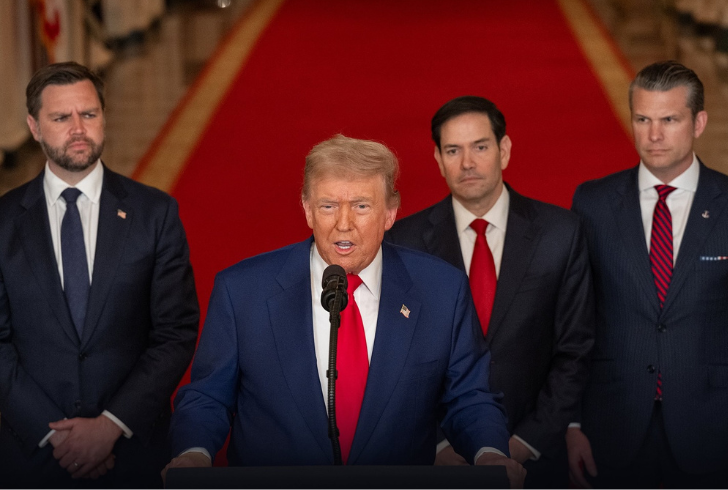
Instagram | realdonaldtrump | Trump’s plan to secure oil with contractors meets resistance from an unconvinced Exxon Mobil.
Reports indicate the Trump administration may consider using private military contractors to protect Venezuelan oil assets. However, some executives remain hesitant. The CEO of Exxon Mobil reportedly described Venezuela as “uninvestible” shortly after Maduro’s capture due to ongoing instability.
On the same day the Venezuelan law passed, the U.S. Treasury eased certain sanctions on Venezuela’s oil sector. A new general license allows U.S. companies to engage in specific operations with the Venezuelan government, including exporting, purchasing, storing, and transporting oil.
Trump also announced that U.S. commercial airspace over Venezuela would be “opened up.” Jorge Rodríguez credited this to diplomatic efforts led by his sister, calling it a positive step in peace negotiations.
Implications for the Oil Market
The new law and eased sanctions may attract foreign investment and increase oil production in Venezuela’s untapped fields. Challenges remain, such as political uncertainty and outdated infrastructure. Still, the reforms signal a shift in Venezuela’s approach to its energy resources.
By letting foreign companies operate independently, Venezuela aims to boost production, stabilize its economy, and strengthen its role in global energy markets. Meanwhile, tensions with Cuba and the U.S. continue to influence regional energy dynamics.
Opening the oil sector shows Venezuela’s intent to attract international capital and expertise while balancing relations with the U.S. For investors and importing countries, the development highlights both opportunities and risks in one of the world’s richest energy regions.
More in Criminal Attorney
-
 How to Secure a Government Job During Budget Cuts
Federal hiring slows down when budgets tighten, yet it never stops completely. Agencies still need analysts, advisors, and policy staff to...
March 1, 2026 -
 Brooklyn Beckham’s Billionaire Father-in-Law Breaks Silence on the Family Feud
The Beckham family drama just took another sharp turn. This time, the voice cutting through the noise belongs to billionaire investor...
February 22, 2026 -
 Notre Dame Faces Faculty Resigns After Controversial Appointment
Tension is rising at the University of Notre Dame after two scholars cut formal ties with the Liu Institute for Asia...
February 22, 2026 -
 High Court Upholds Malay Celeb Preacher Da’i Syed’s Rape Conviction
The Shah Alam High Court has spoken, and it spoke clearly. Celebrity preacher Da’i Syed will go to prison now, not...
February 15, 2026 -
 Is a ChatGPT-Written Will Legal?
At first glance, using AI to draft a will seems like a smart idea. It’s fast, free, and has a modern...
February 6, 2026 -
 Prince Harry Supports Elizabeth Hurley in Tabloid Privacy Case
London’s High Court became the center of attention as Prince Harry appeared in support of Elizabeth Hurley during an emotional hearing...
February 6, 2026 -
 5 Ways AI Is Transforming Daily Legal Workflows
AI did not storm into law firms with fireworks. It slipped in through contracts, research tabs, inboxes, and meeting notes. By...
February 1, 2026 -
 How to Legally Protect Your Side Hustle Without Spending a Fortune
Starting a side hustle is a practical way to test a business idea, generate extra income, or lay the foundation for...
February 1, 2026 -
 Mayor Zohran Mamdani Appoints Christine Clarke as Human Rights Chair
On January 7, 2026, during his first full week in office, Zohran Mamdani made a move that set the tone for...
January 25, 2026
More From Lawyers Favorite
-
 Criminal AttorneyUS Supreme Court Limits Sentence Reductions for Federal Prisoners
The U.S. Supreme Court has issued a major ruling that reshapes how far prison reform laws can reach into past sentencing....
June 12, 2026 -
 Celeb JusticeInside Ex-Prince Andrew’s “Bleak” Life in Exile as New Claims Emerge
Once positioned near the center of Britain’s royal institution, Andrew Mountbatten-Windsor now faces a reality far removed from palace ceremonies and...
June 6, 2026 -
 Legal AdviceU.S. Lawmakers Push Bill to Expand Burn Pit Benefits to Civilian Workers
A bipartisan group of U.S. lawmakers has introduced a draft proposal aimed at expanding workers’ compensation access for civilian federal employees...
May 30, 2026 -
 Law DegreePentagon AI Use in War Raises Questions on Legal Limits and Accountability
AI has moved from support tools in defense operations to a central part of how modern warfare is conducted. In the...
May 22, 2026 -
 Criminal AttorneyIdaho Bathroom Law Faces Federal Lawsuit by Transgender Residents
A new Idaho law restricting restroom access has triggered a federal court challenge from transgender residents who say it places daily...
May 15, 2026